
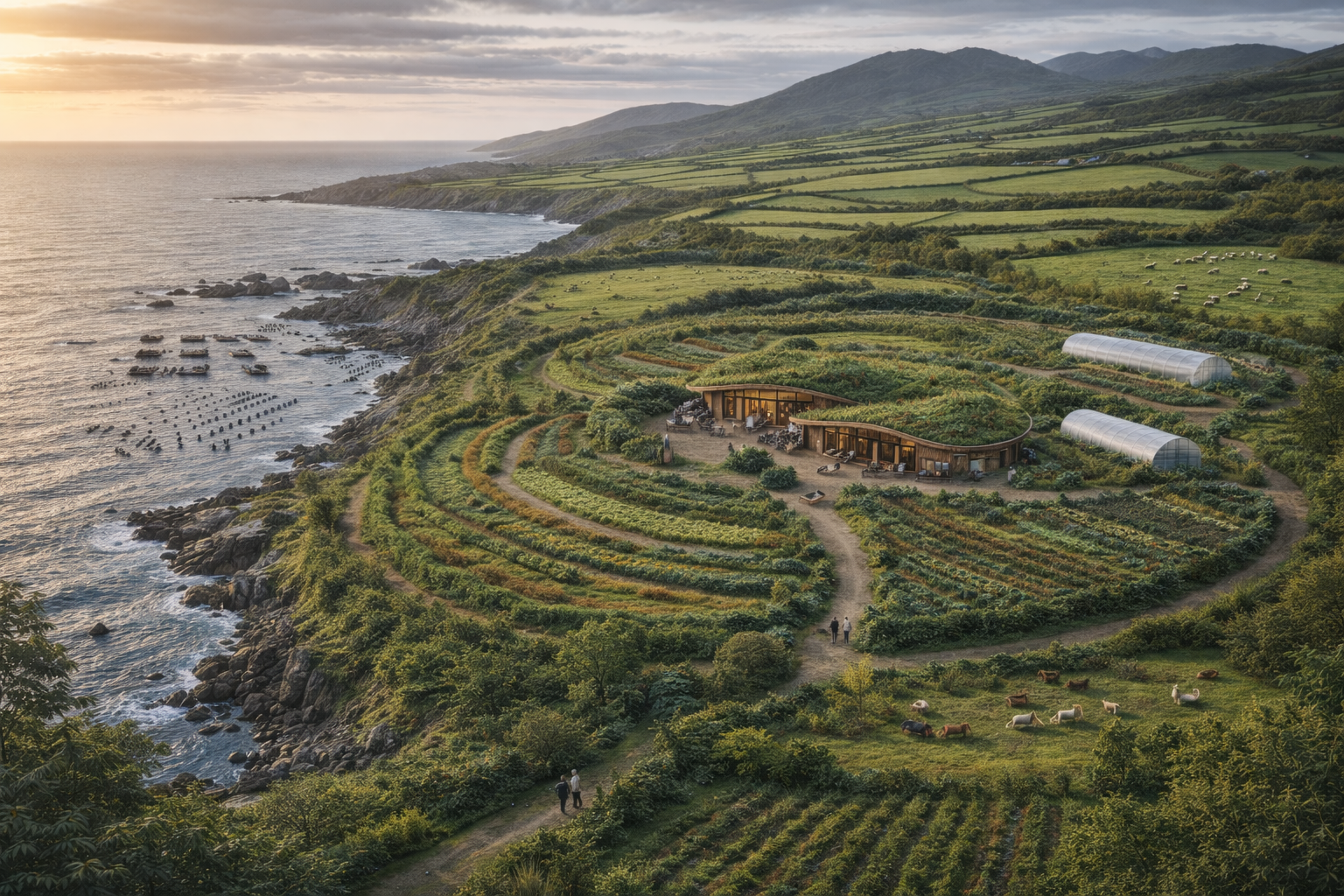
Deep Land. Full Ecosystem. Long-Term.
A 30–80 acre model for rural regeneration, livestock integration, and regional food system development.
EatoFarm Regenerative is a larger-scale, ecologically complete farm model designed for rural locations with full ecosystem integration. It combines mixed production, livestock systems, biodiversity restoration, and deep land stewardship — building long-term value for land, community, and the regional food system.
Overview
EatoFarm Regenerative is the larger, deeper, and more ecologically complete expression of the EatoFarm model.
EatoFarm Regenerative is the larger, deeper, and more ecologically complete expression of the EatoFarm model. Where the compact farm demonstrates intensity and efficiency, the regenerative farm demonstrates depth — restoring landscapes, integrating livestock, supporting biodiversity, and developing the long-term land value that underpins the EatoSystem's regional infrastructure.
30–80 acres
Scale
Rural & landscape-led
Setting
Full ecosystem integration
Model
Long-term regional
Horizon
Strategic Strengths
Why Rural works.
01
Full ecosystem integration
At 30–80 acres, the regenerative model can support mixed production, livestock systems, habitat restoration, and water management within a single coherent land strategy.
02
Stronger ecological resilience
Greater land area enables genuine biodiversity gain — hedgerows, wetlands, native planting, and habitat corridors that build lasting ecological value into the farm.
03
Livestock and soil improvement
Grazing systems integrated with arable and market garden production create a natural nutrient cycle — building soil health without reliance on external inputs.
04
Long-term land value
Regenerative management builds value into the land itself — improving productivity, biodiversity, and marketability over a 10–20 year horizon.
05
Connection to Eato Estates
The regenerative model is the primary development pathway toward Eato Estates — larger-scale estate infrastructure that represents the physical long-term vision of the EatoSystem.
Location Strategy
Where Rural works best.
EatoFarm Regenerative thrives in rural locations with landscape character — land that has the scale, ecological potential, and regional identity to anchor a long-term food system node.
Rural counties with landscape identity
Locations where the landscape itself communicates quality — rolling hills, river valleys, coastal edges, or upland terrain with strong visual character.
Land with regeneration potential
Sites that have been farmed conventionally but retain the underlying soil quality and ecological structure to respond to regenerative management.
Access to water systems
Rivers, streams, ponds, or reliable rainfall — water access is essential for livestock integration, irrigation, and wetland habitat development.
Regional food system opportunity
Areas where local food infrastructure is underdeveloped — where an EatoFarm can become genuinely foundational to the regional food economy.
Proximity to Eato Estate potential
Sites that could eventually grow into or connect with a larger Eato Estate development — the regenerative farm as the first phase of a longer-term land strategy.
Farm Layout
How the farm is structured.
Each zone within an EatoFarm Rural is designed intentionally — not as separate elements, but as an integrated layout where production, experience, and ecology are always in conversation.
Mixed Production Zones
Arable, market garden, and polytunnel growing areas — diversified crop production across the full growing season, integrated with the wider farm ecosystem.
Grazing & Livestock Systems
Rotational grazing for cattle, sheep, or mixed livestock — building soil fertility, managing grassland, and producing pasture-raised meat and dairy.
Habitat Restoration Areas
Dedicated zones for native woodland, hedgerow restoration, wildflower meadows, and wildlife corridors — building biodiversity into the farm's long-term identity.
Water & Wetland Management
Ponds, stream corridors, rain gardens, and managed wetlands — water as an asset, ecological feature, and resilience mechanism within the farm system.
Accommodation & Retreat Layer
Farmhouse stays, eco-lodges, or retreat cabins embedded in the landscape — higher-end hospitality with genuine immersion in the working environment.
Enterprise & Education Hub
A well-designed gathering space for enterprise offsites, educational programmes, and community engagement — positioned within the farm but distinct from production areas.
Revenue Model
The Rural business model.
EatoFarm Rural generates revenue across multiple streams — combining food production, hospitality, enterprise, education, and future data integration into a financially resilient operation.
Produce & Livestock
Mixed crop and livestock sales — seasonal produce, pasture-raised meat, and dairy into local and regional supply chains.
Retreat Experiences
Multi-night farm stays and retreat packages — deeper immersion, higher price point, and longer guest engagement than compact stays.
Enterprise Immersion
Longer-format enterprise retreats, leadership programmes, and offsite experiences — the rural setting enabling deeper engagement.
Workshops & Education
Seasonal workshops on soil, ecology, food systems, and sustainable land management — education with genuine depth and credibility.
Environmental Value
Biodiversity credits, carbon sequestration, and ecosystem services — growing revenue streams as environmental markets develop.
EatoIndex Integration
Full integration with EatoIndex, EatoIX, and EatoAI — the regenerative farm as a rich, long-running data node within the EatoSystem.
The regeneration layer.
EatoFarm Regenerative doesn't just produce food. It actively improves the land it occupies — building ecological value that compounds over time.
Soil Health
Regenerative grazing, cover cropping, and minimal tillage rebuild the soil biology that conventional farming depletes. Healthy soil is the foundation of everything.
Biodiversity
Native hedgerows, wildflower meadows, and habitat corridors create measurable gains in species diversity — insects, birds, mammals, and soil organisms.
Water Systems
Managed ponds, stream buffers, and rain gardens slow, spread, and sink water through the farm — improving both water quality and flood resilience.
Habitat Quality
Dedicated restoration zones provide long-term habitat for species under pressure from conventional agriculture — adding ecological depth to the farm's identity.
Long-Term Resilience
A regeneratively managed farm becomes more productive, not less, over time — building resilience to climate variation, input price changes, and market shifts.
Role in the EatoSystem
Where it fits.
EatoFarm Rural is not an isolated project. It is a strategic node within the wider EatoSystem — connected, purposeful, and designed to compound in value over time.
Rural ecosystem node
EatoFarm Regenerative anchors the EatoSystem in the rural landscape — a visible, operating example of what long-term food system thinking looks like on the ground.
Land-restoration engine
Each regenerative farm measurably improves the land it occupies — building ecological and agricultural value that compounds over a 10–20 year horizon.
Regional food system builder
At 30–80 acres, the regenerative farm can supply local restaurants, producers, and communities at meaningful scale — becoming genuinely embedded in the regional food economy.
Pathway to Eato Estates
The regenerative model is the development pathway toward Eato Estates — the longer-term, larger-scale estate infrastructure that represents the EatoSystem's fullest expression.
Long-term strategic infrastructure
EatoFarm Regenerative is not a project. It is infrastructure — a long-term land asset that builds value, capability, and presence for the EatoSystem across decades.
EatoFarm Rural
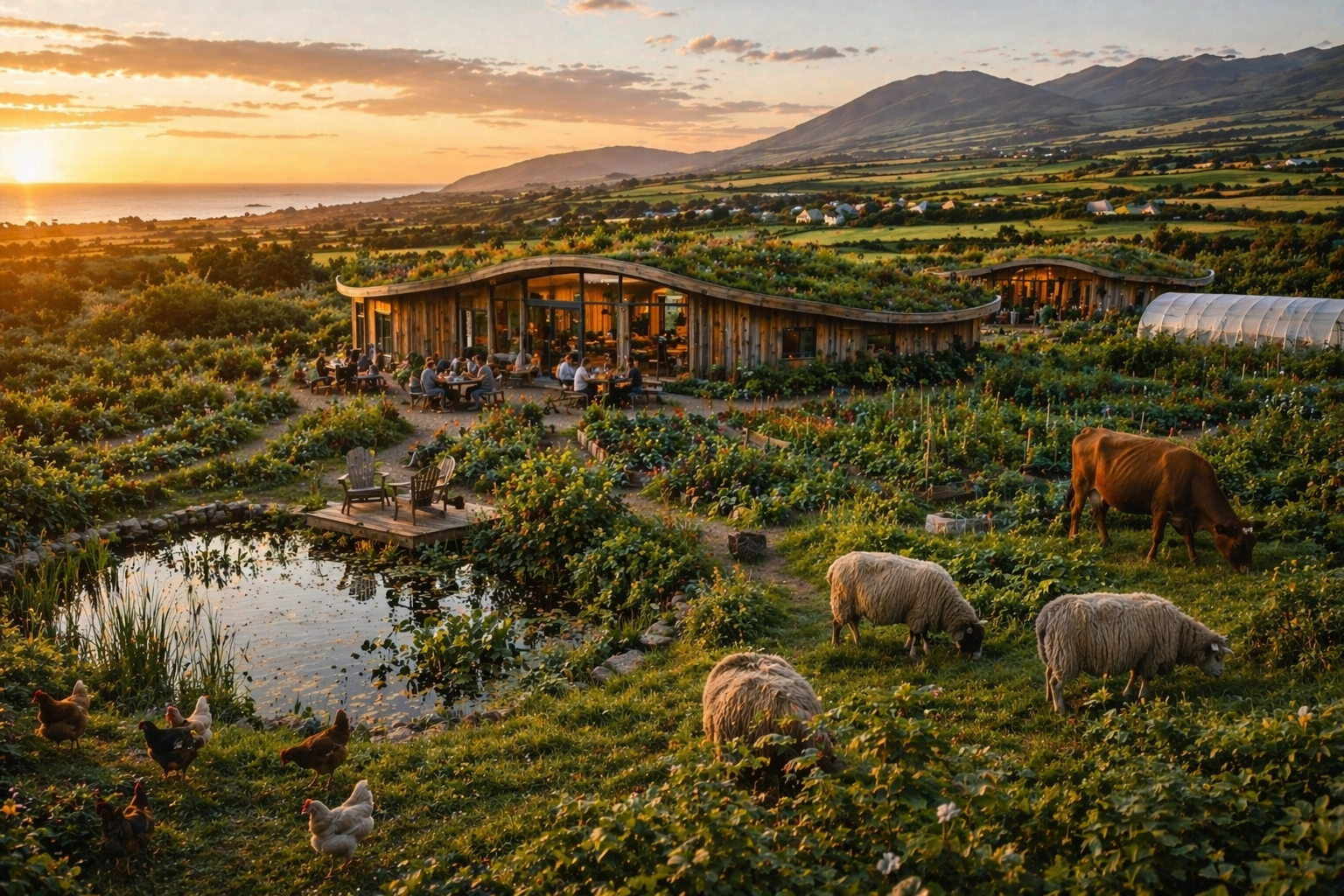
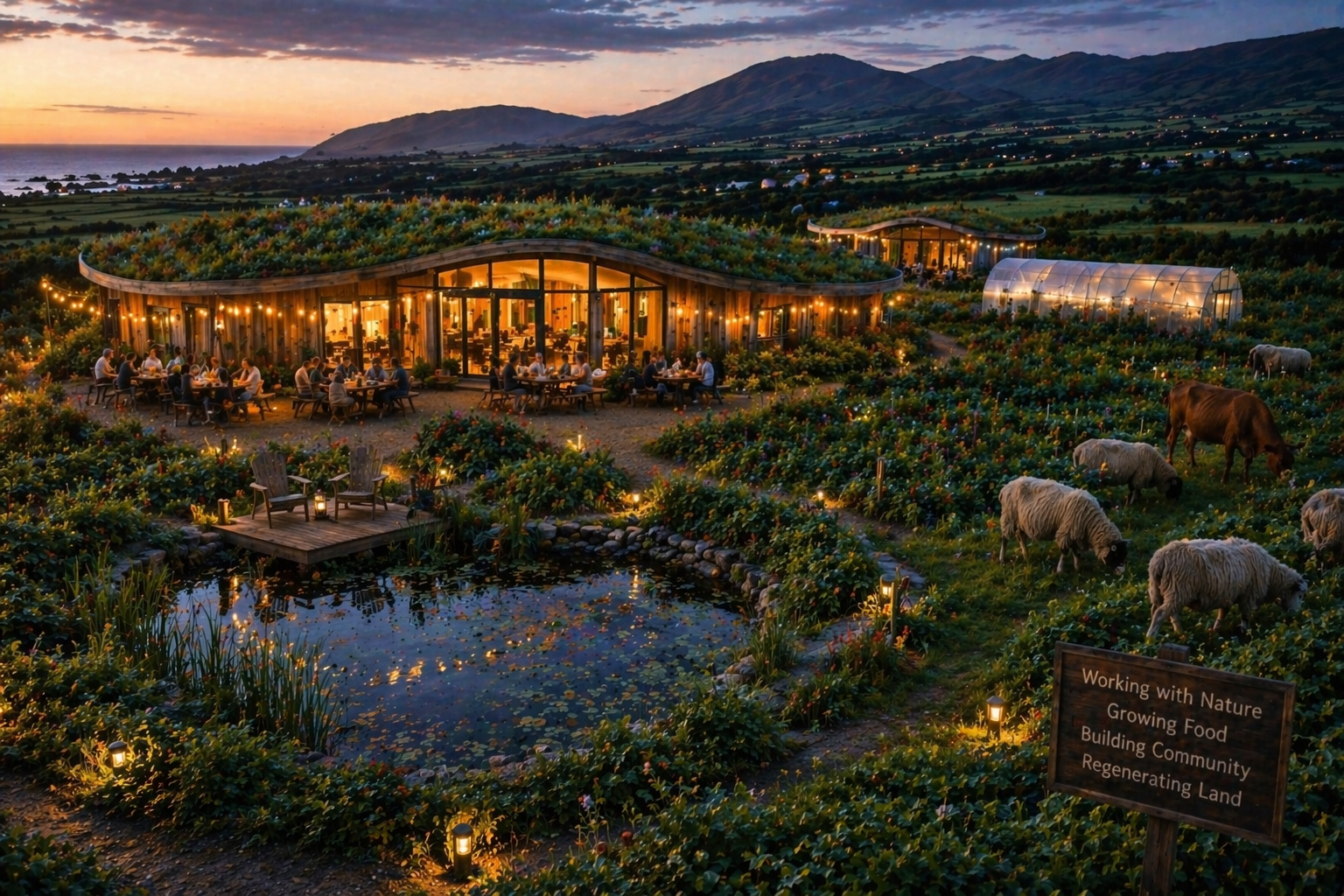
Develop an EatoFarm Rural.
Partner with Eato to develop an EatoFarm Rural — as a landowner, operator, or strategic investor. Or explore the EatoFarm Local model to understand the full range of EatoFarm development pathways.